
Key question
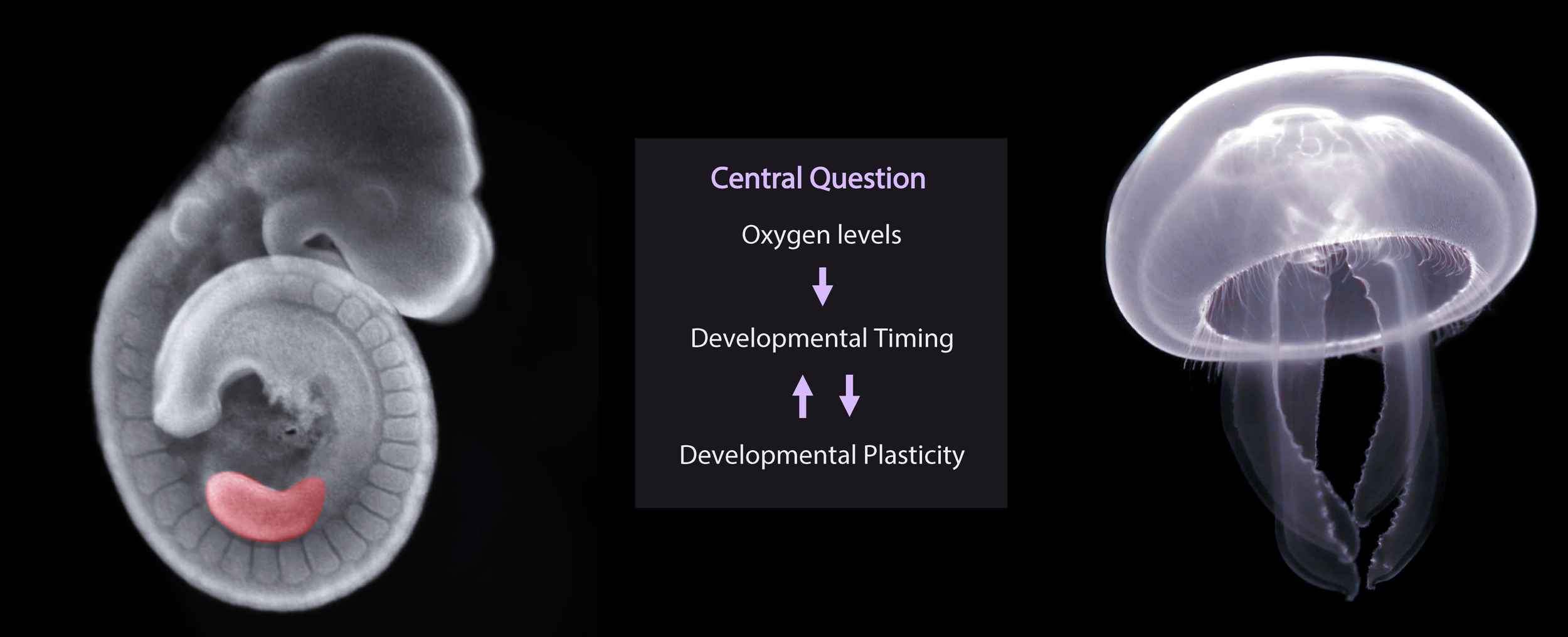
What regulates developmental timing and how does it matter?
Embryogenesis is programmed to occur at the right time and right place. Alterations of timing however, can happen more frequently than that of the space. Such alternations have profound impacts on development, tissue fitness, and evolution. Here in the lab we are pursuing the understanding of fundamental mechanisms that drive developmental timing alteration in such processes, and in reverse way, how altering developmental timing regulates development, tissue fitness, and evolution.
We use two model systems to address this question: 1) mammalian embryogenesis, and 2) jellyfish developmental reversal.
Specific Directions
How does oxygen level regulate developmental timing?
Oxygen and Limb developmental timing
One magnificent trait evolved in placental mammals of placental mammals is that embryos develop entirely within the mother. While this provides a stable and protected environment, it also means that developing embryos are constantly influenced by maternal conditions. Among these, oxygen levels are especially important. Early embryos develop in relatively low-oxygen (hypoxic) conditions before the placenta is fully formed, a situation traditionally viewed as a simple constraint on development.
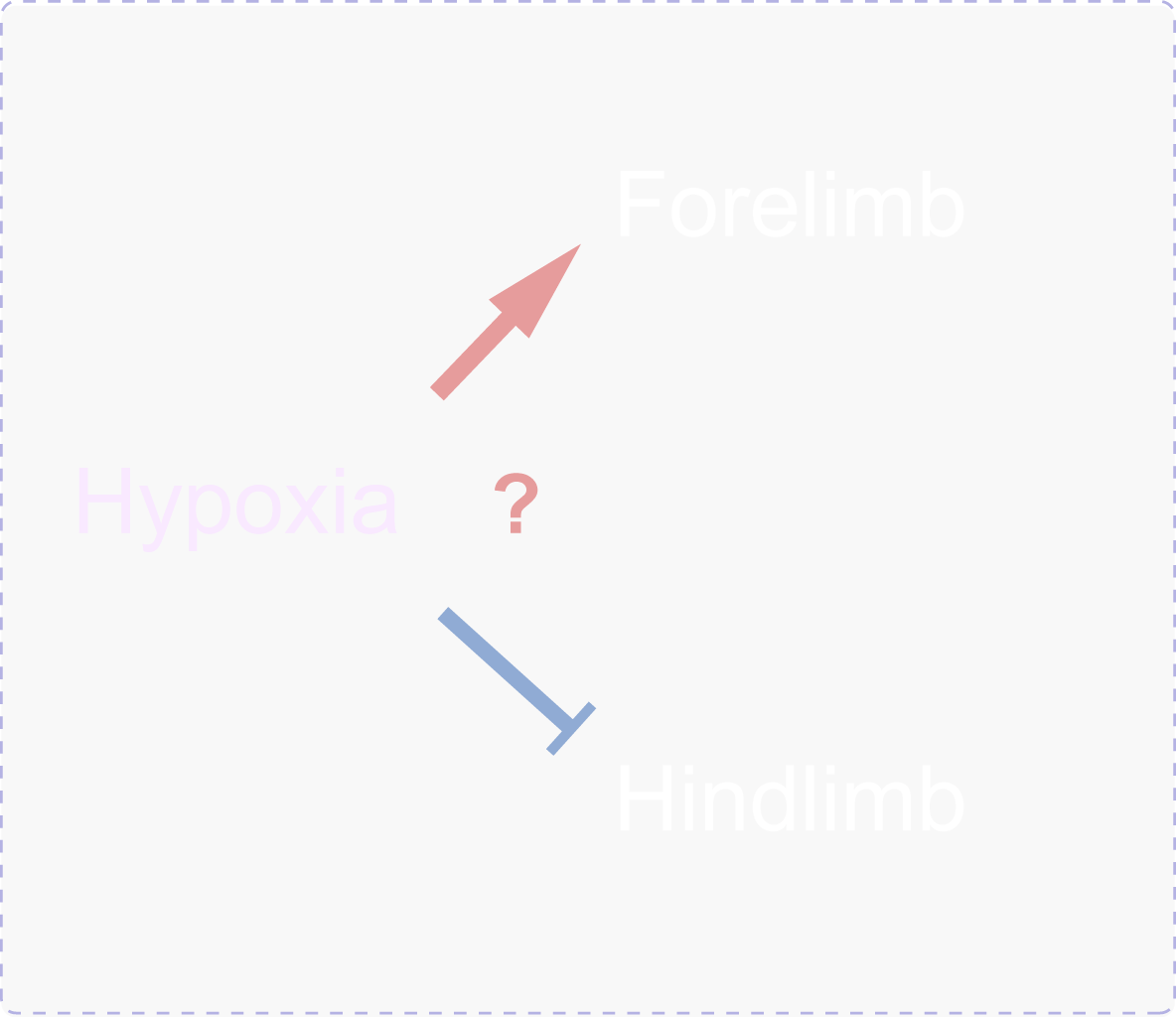
Our work challenges this view. We have shown that oxygen is not just a limiting factor, but an active signal that helps shape how the embryo develops (Zhu et al., 2024). In particular, we found that low oxygen levels affect the timing of limb development in different ways: they promote the formation of forelimbs (arms) while delaying the formation of hindlimbs (legs). This difference in timing, known as limb heterochrony, is a common feature of placental mammal development.
Our lab is now working to understand how the same environmental signal can produce such different outcomes in closely related tissues. By uncovering how oxygen interacts with genetic programs in developing limbs, we aim to reveal how maternal conditions actively guide fetal development. Ultimately, this work will help us better understand how environmental factors shape development, timing, and evolution.
How does tissue accelerate developmental timing as recovery strategy?
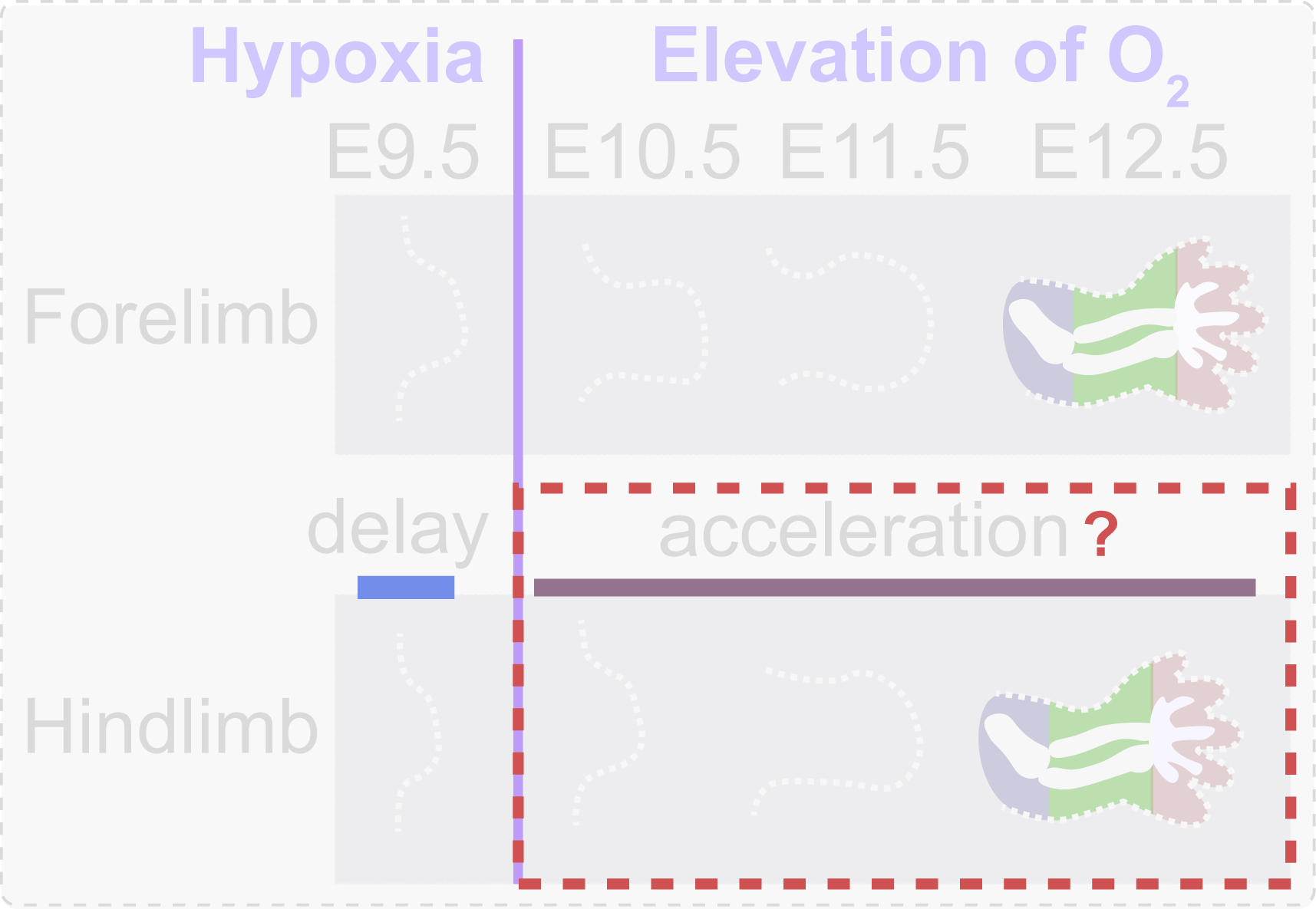
In addition to tissue-specific responses to low oxygen, developing tissues must also recover once normal conditions are restored. When development is delayed, embryos need mechanisms to resume the normal time table and stay on track. One way they achieve this is by accelerating developmental timing.
Hindlimb development presents typical example that manifests this strategy. Under low-oxygen conditions, hindlimb formation is delayed. However, once oxygen levels rise, the hindlimb does not simply resume at a normal pace—it speeds up, developing in an accelerated manner to catch up with the forelimb.
Our lab is investigating how this recovery process is controlled at the molecular and cellular levels. By understanding how embryos adjust their developmental speed in response to environmental changes, we aim to uncover fundamental principles of developmental plasticity—how embryos remain robust and adaptable despite the challenges they encounter during development.
How does hypoxia-tolerance decline in development and ageing?
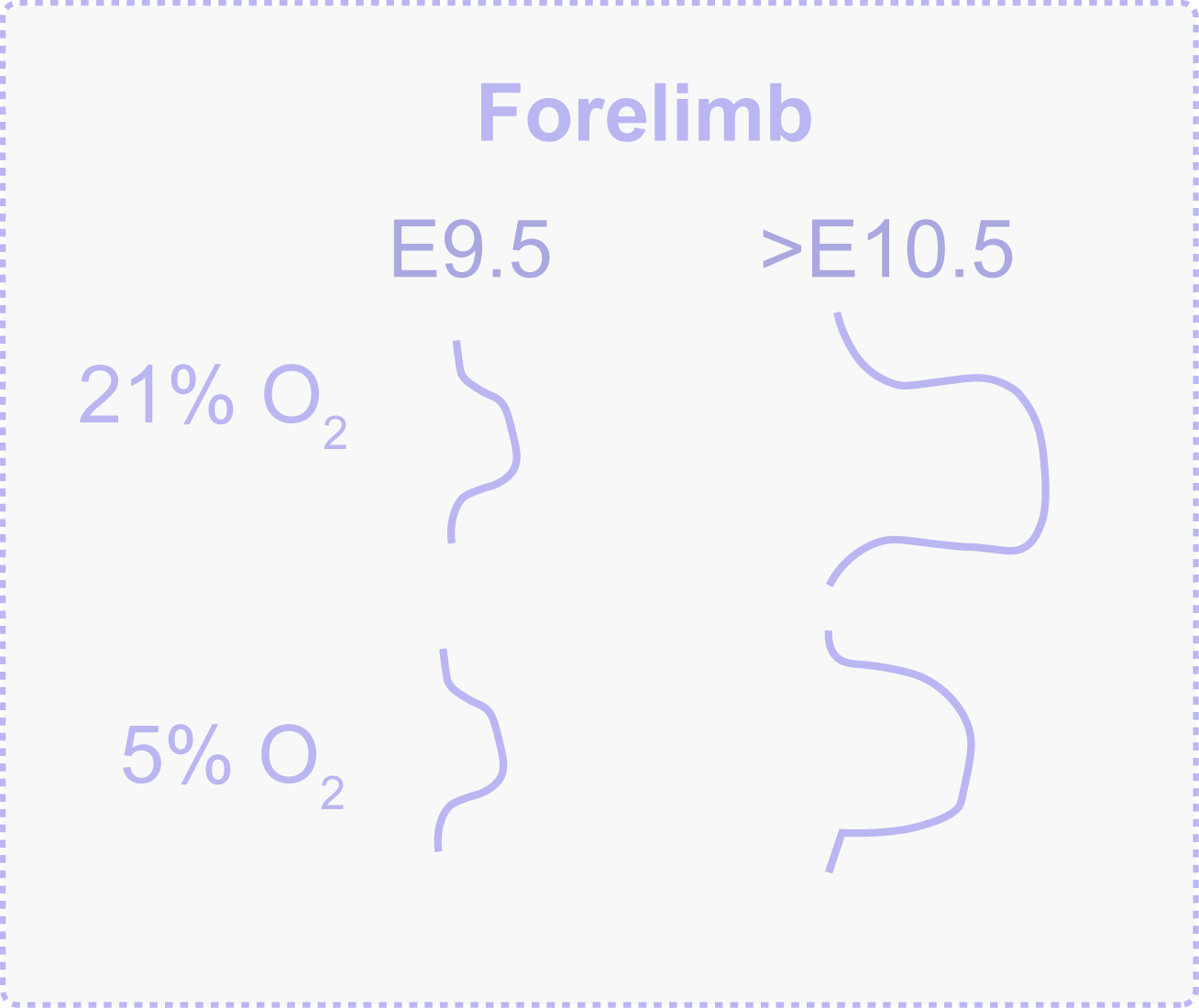
Although early embryos can adapt remarkably well to low oxygen, hypoxia during pregnancy remains a major cause of congenital defects and contributes to a significant proportion of neonatal mortality. This apparent paradox reflects a critical shift during development: the ability to tolerate hypoxia declines as embryos mature.
What drives this loss of tolerance is still unknown. Importantly, this phenomenon is not limited to embryonic development. Similar declines in hypoxia resilience are seen in ageing tissues—for example, in neurons, where reduced tolerance to low oxygen is linked to age-related degeneration.
Our lab aims to uncover the mechanisms behind this decline in hypoxia tolerance across developmental and ageing contexts. By understanding how tissues lose their ability to adapt, we hope to shed light on the origins of hypoxia-related birth defects as well as age-associated diseases. More broadly, this work will reveal how developmental timing shapes tissue plasticity across the lifespan.
Jellyfish development, regeneration and reversal
What regulates developmental reversal?
Most developmental processes are one-way: once an organism reaches adulthood, it cannot go back. While individual cells can sometimes be reprogrammed, reversing development at the level of whole tissues—or an entire organism—remains largely beyond reach.
Jellyfish challenge this fundamental rule.
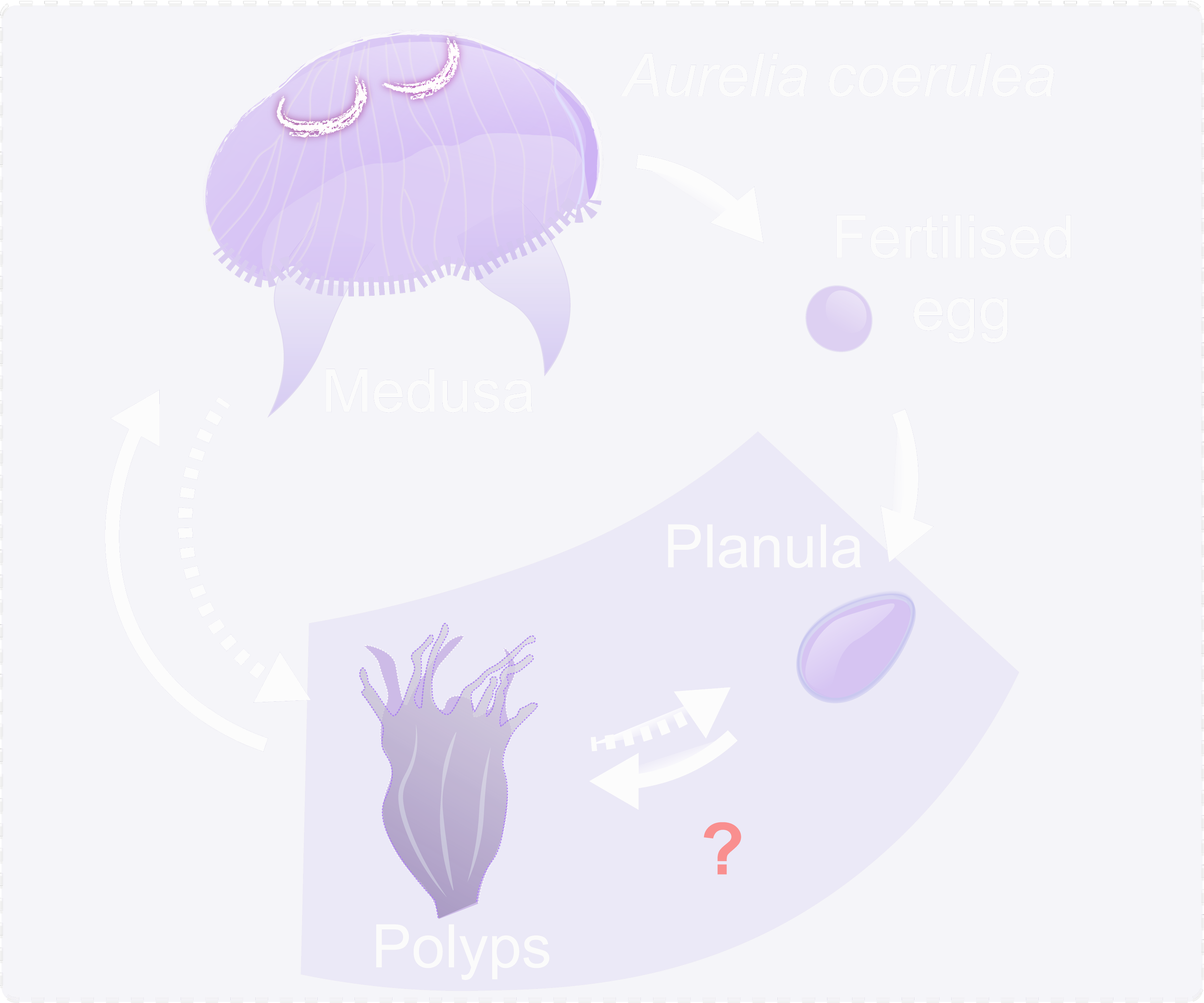
A small number of jellyfish species have the remarkable ability to reverse their life cycle, transforming from an adult form back into a juvenile state. Our lab focuses on one of these species, Aurelia coerulea, to understand how this process is possible. We are asking the following specific questions: What genetic programs are rewired? How do cells and tissues reorganize to rebuild a younger body?
These questions will open the door and new ways of thinking how altering developmental timing regulate tissue plasticity.
Beyond reversal, we also study how jellyfish normally develop and regenerate. Aurelia displays powerful regenerative abilities, and we aim to understand how these capacities are established and how they differ from other well-studied cnidarians.
Planula (Larva)
Ephyra
Juvenile medusa
We welcome undergraduate students, PhD students, technicians, postdocs to join our journey to investigate the cross-regulation between developmental timing and developmental plasticity!
Research
Filters
No results found
No results match your search. Try removing a few filters.